Understanding UTP Data Cables in Johannesburg
What Are UTP Cables and How Do They Work
In Johannesburg’s business district, a single faulty network drop can stall an entire trading floor. That’s why understanding how UTP data cables Johannesburg installations work is essential for anyone managing infrastructure.
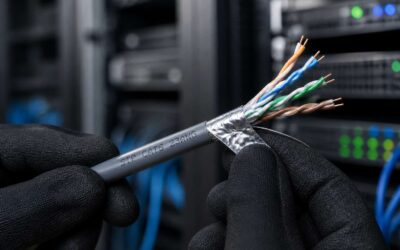
UTP stands for unshielded twisted pair. Four pairs of copper wires, each twisted at a specific pitch, form the cable. The twist rate differs per pair, and that variance suppresses electromagnetic interference. When a signal travels down one wire, the adjacent wire carries the opposite polarity signal. The fields cancel each other out, a method called differential signaling.
Performance depends on three variables:
- The tightness of each twist.
- The consistency of the twist along the run.
- The separation distance between pairs.
In a Johannesburg roof void, UTP data cables Johannesburg installers handle daily can deform from a sharp bend, increasing crosstalk and reducing bandwidth. That’s a practical reality I see on every site visit!
Key Standards and Categories for UTP Cabling
Johannesburg’s high ambient electromagnetic noise means category choice matters more than most installers admit. The TIA/EIA-568 and ISO/IEC 11801 standards define performance tiers, each with its own bandwidth ceiling and alien crosstalk limits. Selecting UTP data cables Johannesburg businesses deploy starts with knowing the distance to the switch and the expected traffic load.
Consider these factors before a single box arrives on site:
- Cat5e: 100 MHz, enough for everyday office traffic.
- Cat6: 250 MHz, better return loss for gigabit links.
- Cat6a: 500 MHz, tolerates 10GBASE-T across 100 metres.
Standards also govern bend radius, pull tension, and termination methods. A cable rated Cat6a on paper but kinked behind a Sandton rack will never perform to spec. Commissioning tests like Permanent Link and Channel measurements verify that installed UTP data cables Johannesburg facilities meet the promised category, not just the label on the box.
Benefits of UTP Cables for Local Networks
Johannesburg’s electromagnetic noise is not a theoretical concern. It is a measurable reality. The city’s dense concentration of heavy industry, mine dumps, and high-voltage power lines creates a constant hum of interference that can degrade data integrity.
Twisted pair cable is designed to combat this ambient chaos. The internal twists cancel out electromagnetic interference, or EMI, at the source. This is not an engineering trick. It is a physical shield that keeps your data moving cleanly through a warehouse in Germiston or a call centre in Randburg.
One of the greatest advantages of unshielded twisted pair is its balance of performance and practicality. For local area networks, this balance is critical. The cost per drop is lower than fibre, while installation remains straightforward for certified technicians.
For businesses looking to upgrade their infrastructure, the benefits are clear:
- Reduced crosstalk between adjacent pairs, which maintains signal quality over longer horizontal runs, essential for sprawling facilities.
- Lower economic overhead for retrofitting older buildings, where ducting space is limited; UTP’s small diameter fits where bulkier cables cannot.
- Performance headroom for future applications, allowing a current network to support growing data demands without immediate recabling.
Consider an office floor in Braamfontein. With dozens of devices firing data packets simultaneously, the physical layer must absorb that stress quietly. UTP data cables Johannesburg firms install today support this load while remaining adaptable to tomorrow’s higher-speed equipment. The real skill lies in selecting a cable that handles both the city’s noise and your network’s specific traffic patterns.
Common Applications in Johannesburg Businesses and Homes
Understanding where UTP data cables Johannesburg fit best means looking at the everyday environment. Houses and flats use them to connect smart TVs, gaming consoles, and Wi-Fi access points. Business parks use them for point-of-sale terminals, IP cameras, and VoIP handsets.
The practical applications across this city are pretty clear:
– Linking office workstations to central network switches.
– Feeding reliable connections to home media hubs.
– Supporting security camera systems and access control units.
These tasks do not require exotic glass fibre or complex setup. They simply demand a stable, cost-effective wire that can carry motion, voice, and data without losing quality. That is why UTP data cables Johannesburg remain the default backbone for everyday networking, offering the right mix of speed and simplicity for homes and offices alike.
Choosing the Right UTP Cable for Your Johannesburg Network
Comparing Cat5e, Cat6, Cat6a, and Cat7 for Local Conditions
Johannesburg businesses rely on structured cabling for daily operations. UTP data cables Johannesburg network installers use provide the foundation for most LAN connections. Unshielded twisted pair technology pairs copper conductors to reduce electromagnetic interference.
Cable category selection determines supported speeds and bandwidth. Cat5e cables deliver gigabit performance for general office environments. Cat6 cables manage higher frequencies and suit locations with moderate interference. Cat6a and Cat7 cables provide additional margin for data centers and critical infrastructure.
Physical factors influence cable choice. Distance limits apply, since UTP transmission attenuates beyond 100 meters. Environmental conditions matter, especially near electrical equipment. Johannesburg installations often run cables through ceiling spaces and conduit, where bend radius and pull tension deserve attention.
Material quality differs between manufacturers. Solid copper conductors outperform copper clad aluminum in conductivity and durability. Buyers should request certification documents and compare specifications. Proper sourcing prevents attenuation and early failure.
Installation work determines real-world performance. Technicians maintain separation from power lines to limit crosstalk. Connector termination follows TIA standards. Post-installation testing verifies wire mapping, length, and signal quality.
The Johannesburg market offers many suppliers of UTP data cables Johannesburg projects need. Selection ultimately depends on workload, environment, and future expansion plans.
Shielded vs. Unshielded UTP: Which Suits Your Environment
Eighty percent of network headaches trace back to the cable, not the hardware. That observation has followed me through many office visits in Johannesburg, where UTP data cables Johannesburg installers lay quietly above suspended ceilings. The choice between shielded and unshielded variants rarely gets the deliberation it deserves.
Shielded cable uses a foil or braided screen to repel interference from nearby electrical equipment. Unshielded twisted pair relies on geometry alone. For a typical Sandton office with tidy trunking and modest power loads, unshielded is perfectly civil. But set up shop beside a lift shaft, a generator room, or a manufacturing floor, and the story changes.
Note that shielding only helps when the entire channel is properly bonded and earthed. A shield that stops halfway is worse than none. It becomes an antenna and invites the very noise it was meant to repel. Ask your installer about earthing requirements before deciding.
Cable Length and Signal Integrity in Urban Installations
In dense Johannesburg office blocks, the route between the switchroom and a workstation often passes through concrete columns, steel beams, and ceiling voids packed with other services. That path has a direct effect on signal integrity.
UTP data cables Johannesburg installers classify runs as horizontal or backbone, but the real constraint is length. For copper UTP, the practical limit is 100 metres per channel, and that includes the patch cords at both ends. Exceed it and attenuation rises, retransmissions increase, and throughput collapses. Choosing the right UTP cable for your Johannesburg network starts with measuring the physical path, not just the straight-line distance. A cable that is too long or bent too sharply will behave differently from one that follows a clean, gentle route. Plan for service loops and future moves, but keep them modest.
Considering Bandwidth and Future-Proofing for High-Density Areas
A single open-plan floor in Sandton can move more data than a small town. The UTP data cables Johannesburg network managers choose today must carry that load and whatever comes next. Future-proofing is about bandwidth headroom, not guesswork.
High-density areas punish undersized cabling. A Cat6 channel that works flawlessly at 1Gbps today will struggle when that same desk demands 10Gbps for cloud rendering or AI workloads. The cable is the cheapest part of the installation. The labour, containment, and downtime cost far more.
When I spec a high-density floor, I look at:
– The physical distance from the switchroom to the furthest workstation.
– The number of active devices per rack unit.
– The projected upgrade cycle for the network hardware.
UTP data cables Johannesburg require careful selection. Buying headroom you might not use for years is not waste. It is insurance.
Budgeting for UTP Cable Purchases in the Johannesburg Market
When procurement treats UTP data cables Johannesburg as a commodity, the network pays for that decision every single day. The lowest quoted price rarely accounts for the performance ceiling it imposes. A Cat6 cable that passes certification today may still fail to deliver consistent 10GBASE-T performance in the demanding heat of a Johannesburg summer, especially when cable bundles run through ceiling voids without adequate ventilation.
The real cost calculation for UTP data cables Johannesburg includes the price of failure. A single failed link in a trading floor or a medical practice means lost transactions or delayed diagnoses. The labour to replace a poorly performing cable, often after hours and under pressure, exceeds the savings from choosing the cheaper option.
Several factors shape the pricing landscape in the local market:
– Copper market volatility, which shifts raw material costs quarterly
– The certification and test reports that reputable suppliers provide
– Lead times from manufacturers, which fluctuate with global demand
– The warranty terms that protect your investment over a decade
Budgeting for UTP cable purchases in the Johannesburg market requires a different mindset. You are not buying copper and insulation. You are buying certainty. A structured cabling specification with documented performance parameters gives your installer a clear mandate. That specification becomes the basis for competitive quotes, ensuring every bidder prices the same quality of UTP data cables Johannesburg. When the quotes come back, the variance reveals who truly understands the local installation conditions and who is simply moving stock.
Installing UTP Cabling in Johannesburg
Compliance with South African Electrical and Safety Regulations
A statistic from the South African Property Owners Association suggests that over 60% of non-compliant electrical certificates are linked to poor installation practices, not faulty equipment. When you run UTP data cables Johannesburg, you are participating in a technical process governed by the SANS 10142-1 wiring code. This code is not a suggestion; it is the legal baseline for any low-voltage infrastructure.
The physical separation between data and power cabling is a primary concern. You cannot simply bind a Cat6 line to a 230V conduit. The regulations demand segregation, often of at least 50mm, to prevent electromagnetic interference and reduce fire risk. Furthermore, the pathway must respect the structural integrity of the building. Drilling through fire-rated walls without sealing the breach with a firestop compound nullifies the wall’s protective rating. This oversight creates a hazard that inspectors will flag immediately.
Each installation must account for specific variables that are common in local conditions.
– Compliance with the Occupational Health and Safety Act for termination points.
– Use of flame-retardant jackets (LSZH) in plenum spaces.
– Verification of earth bonding for metallic cable trays.
Ignoring these protocols can invalidate your insurance and pose severe safety risks. Professionals who purchase UTP data cables Johannesburg must pair them with certified electricians familiar with the municipal by-laws, ensuring the physical layer of your network remains secure and lawful.
Testing and Certifying Installed UTP Links
Pulling a UTP data cables Johannesburg run through a ceiling is the easy part. Proving every link performs to category specs is where things get honest.
A certification test, typically run with a copper tester such as a Fluke DSX, measures attenuation, return loss, and near-end crosstalk. Anyone selling UTP data cables Johannesburg will tell you the cable is only half the story. The test finds the termination that looked snug but wasn’t, or the cable that got pinched behind a fire door.
Here is what a certifier will flag:
- Failing wiremap on a keystone jack termination
- Excessive length that breaches the 90 metre permanent link limit
- Impedance mismatch from a cheap patch panel
The test report is the document your insurance, your client, and your conscience will want. A certified link is a statement of fact, not a guess.
Sourcing UTP Cables in Johannesburg
Top Local Suppliers and Distributors of UTP Cables
Johannesburg relies on a dense web of connectivity, and the local sourcing landscape has matured to meet that demand. Far from a simple transaction, securing reliable UTP data cables Johannesburg installers and businesses depend on requires navigating a network of established electrical wholesalers and specialised IT infrastructure distributors.
The market here is characterised by a few large, stock-heavy suppliers and a host of agile niche players. For large-scale commercial rollouts, the big distributors generally offer bulk pricing and consistent stock levels. However, for bespoke or urgent requirements, the smaller specialists often provide more flexible service. The most effective approach is to establish relationships with both types of vendors to mitigate supply chain risks.
– Verify the distributor holds current certifications from major manufacturers.
– Check for local stock availability to avoid lengthy lead times.
– Confirm warranty terms are honoured and supported locally.
A pragmatic assessment of the vendor’s location is also wise. A supplier based in Midrand or the East Rand may offer competitive prices, but consider the logistics of getting cable to a site in Sandton or Roodepoort. Delivery times and transport costs can erase any savings from a cheaper quote. Ultimately, the best supplier is not always the cheapest; it is the one that can guarantee the right spec, at the right time, for the unique conditions of your project.
Pricing Trends and Bulk Purchase Options
Pricing for UTP data cables Johannesburg has shifted noticeably over the past year. Copper costs fluctuate globally, and local stock levels often dictate the final figure. Bulk purchases remain the clearest lever for savings, but only if you time it right. Suppliers typically discount at 500 meters or more, yet some offer better per-meter rates at 1000 meters.
Watch the rand exchange rate, it moves fast! I have seen quotes vary by 20% in a single week. A supplier holding stock locally avoids freight surcharges that inflate quotes. Compare three quotes before committing. Check whether the price includes delivery to your site, because transport from a depot can add 10% to 15%.
For large projects, ask about staggered deliveries to manage cash flow without losing the bulk discount. That approach keeps your project moving while protecting your budget.
Quality Assurance and Warranty Considerations
The cheapest quote for UTP data cables Johannesburg can become the most expensive decision you make. A 305 meter box that fails certification after installation costs far more in labour and downtime than the initial savings. I have watched projects stall because a bargain cable delivered attenuation values that would not pass a basic Fluke test.
Quality assurance starts with the manufacturer’s mark on the box. Genuine cable has consistent printing, clear batch numbers, and packaging that shows no signs of re-spooling. Some local suppliers offer cut lengths from bulk drums, which saves money but removes the traceability of a factory sealed box. Ask for the data sheet and compare the stated specifications against the category you require.
A formal warranty is your safety net, and it should be written, not verbal. A supplier who stands behind their stock will document the coverage period, the claim process, and what exactly is covered.
– Confirm whether the warranty covers manufacturing defects only or also includes installation faults.
– Check if the warranty transfers to a new owner if you sell the property.
– Verify that the warranty requires certified installation to remain valid.
The warranty reflects the supplier’s confidence in their inventory. A one year guarantee on a cable expected to last twenty years suggests the product may not meet the standard. The best suppliers offer warranties that match the manufacturer’s own terms. Remember that a warranty only holds value if the company issuing it still exists next year, so choose a distributor with a physical presence in Johannesburg. This kind of diligence separates a reliable network from a recurring headache.
Delivery and Lead Times Across Johannesburg Suburbs
Delivery windows across Johannesburg suburbs can surprise you. A cable order destined for Sandton might arrive in 24 hours, while the same product takes three days to reach Soweto. This has little to do with distance and everything to do with route coverage from local distributors.
When you source UTP data cables Johannesburg, always verify the lead time before committing. Warehouses in the east, near Kempton Park, serve Centurion and Midrand faster than the West Rand. Ask for stock availability in a local branch.
Typical lead times look like this:
- Sandton, Rosebank, Randburg: 1 to 2 business days
- Soweto, Roodepoort, Krugersdorp: 2 to 3 business days
- Centurion, Midrand, Pretoria East: same day if ordered early
A supplier with dedicated routes beats a national courier network every time. Confirm the delivery schedule before you pay, and you will avoid stale installation delays.
Maintenance and Troubleshooting of UTP Networks in Johannesburg
Common Issues Faced by Johannesburg Businesses
Maintenance of UTP data cables Johannesburg is a slow race against the elements. High summer heat inside ceiling voids and the fine dust that settles across industrial parks change the way copper behaves. A link that passes a certification report in winter may begin dropping packets by March. These intermittent faults are the hardest to trace because they never appear during a scheduled test.
A field technician in Johannesburg often encounters the same repeating culprits:
– Punchdown blocks with only three pairs terminated by a rushed installer
– Stapled cables in roof trusses that have lost their twist ratio over time
– Patch leads that pass bend radius but fail under everyday desk movement
The solution is not exotic hardware. It is a planned inspection routine and prepared path mapping. Recognising the physical demands on UTP data cables Johannesburg is the difference between a stable network and one that fails every load test.
Using Cable Testers and Analyzers for Diagnostics
Diagnostic tools sharpen that routine. A cable tester reveals more than continuity; it exposes how UTP data cables Johannesburg were installed and what they have endured. A good analyzer measures return loss, near end crosstalk, and delay skew. Those figures indicate whether the fault sits in a patch panel or a wall outlet. For UTP data cables Johannesburg, thermal drift from ceiling heat shifts measurements across a single day. Run the same test at different hours and compare the traces. Time domain reflectometry locates the exact meter where impedance changes. Some analyzers store baseline results for later comparison.
In my experience, three measurements carry the most weight:
- Return loss at both ends
- Near end crosstalk on every pair
- Delay skew between pairs
Compared against the original certification file, they show whether a link is stable or fading.
When to Repair, Replace, or Upgrade Your UTP Cabling
The test results are in, the graphs have been printed, and your inner detective has identified the culprit. But now the real work begins. With the diagnosis complete, the path forward becomes a strategic decision, not just a technical one. It is a moment that separates a well-oiled network from a recurring headache.
We have all seen it happen. A network starts life with the best intentions, a well-planned layout, and a neat patch panel. Then, someone decides they need an extra desk in a corner that was never meant to have a port. The solution is often a beautiful, golden, flat patch cable running directly across the doorway. It is a classic move. Charles Darwin would be proud of its adaptability, but the Ethernet protocol is less impressed. You have created a network that is vulnerable to stubbed toes and vacuum cleaners, and you have turned a reliable infrastructure into a temporary solution that will outlive its welcome.
The first rule of combat is to know your enemy, and in the world of cabling, the enemy is often environmental. The ceiling spaces in Johannesburg buildings act like massive convection ovens during the summer. The heat causes the copper to expand, which alters the electrical properties of the cable. A link that was perfectly stable at 7 AM can become a packet-loss machine by 3 PM. This thermal drift is a silent killer. It does not trigger a dramatic network-wide failure; it just makes the connection feel slightly “sticky.” Because the issue is intermittent, you can waste days searching for a software bug when the real problem is in the walls.
To combat this, you need to stop guessing and start testing. Here is a reliable procedure for any cable tester worth its salt:
1. Connect the main unit to the wall outlet in the comms room.
2. Attach the remote unit to the far end in the office.
3. Run the full suite of tests, not just the wire map.
4. Compare your results to the TIA standard for your cable category.
5. Check the return loss, as a bad reading here usually means the cable took a sharp bend somewhere.
6. Accept that high near end cross talk might mean the cable runs too close to a fluorescent light fitting.
7. Log the results for future reference, because the cable will only get worse over time.
If the cable passes the electrical tests, the problem might be closer than you think. The drop cable is often the weakest link in the chain. We treat them like furniture, moving them around, running them over with chairs, and bending them into tight knots to fit behind a desk. Once you have spent time diagnosing a costly infrastructure issue, do not justify the time and money spent with a R25 cable from the local flea market. It is a false economy. Invest in quality drop cables that can handle the flexibility, and label the ends. It is a mundane task, but it is one that prevents confusion later.
The decision to repair versus renew comes down to budget and ambition. If your network relies on UTP data cables Johannesburg that are over ten years old, you are running a museum piece. While you can patch it up, you are only delaying the inevitable. The cost of an engineer’s time to endlessly troubleshoot a dying legacy system can quickly exceed the price of a professional installation. If you plan to use more than a gigabit of bandwidth in the near future, or if you simply want to stop worrying about intermittent faults, the most cost-effective “repair” is often a complete upgrade to a modern Cat6a system. This forward-thinking approach is the long-term solution that provides peace of mind, ensuring that your infrastructure is ready for the future.


0 Comments