Why Cable Quality Matters in the Local Market
The Impact of Load Shedding on Network Infrastructure
Load shedding doesn’t just cut the lights. The return of power often brings a voltage surge that can damage networking gear. For this reason, the quality of ethernet cables South Africa installers choose becomes a practical safety issue, not an afterthought.
Cheap cable stock rarely meets the required copper thickness or shielding standards. Heat in roofs and walls degrades cheap PVC jackets over time. This causes signal loss and brittle conductors. Load shedding amplifies the problem. Frequent on and off cycling stresses every connection.
Two factors matter most when selecting cabling for local conditions:
- Pure copper conductors, not copper clad aluminium.
- Proper shielding to resist electromagnetic interference from nearby power lines.
Those features cost more, but they protect the network when Eskom trips the grid.
Understanding Shielding Requirements for High Interference Areas
Copper theft and counterfeit stock plague the local supply chain. A spool of ethernet cables South Africa vendors sell at a bargain price often hides aluminium cores and thin jackets. The result is a network that performs well on a tester but fails within months under real thermal load.
Shielding becomes non-negotiable when your cable route runs alongside industrial machinery or municipal power lines. Unshielded twisted pair picks up electromagnetic noise in these spaces. The interference corrupts data frames, forcing retransmissions that eat bandwidth. This is why choosing ethernet cables South Africa installers recommend usually involves checking the shielding specifications first.
In high interference areas, consider:
- Foiled twisted pair for general office use
- Screened cables for factory floors
- Armoured variants for outdoor runs
Each level of shielding adds cost, but the alternative is a link that negotiates speeds downwards.
How Temperature and Humidity Affect Cable Longevity
South African summer heat does more than make attics unbearable. It accelerates the breakdown of cheap PVC jackets, leaving copper exposed to moisture that corrodes conductors over time. Humidity in coastal regions like Durban creates its own problems, encouraging oxidation at termination points that eventually degrades signal integrity.
In my experience, the local market’s obsession with price per meter overlooks these environmental factors. A cable that performs perfectly in a temperate laboratory will age differently under the Mpumalanga sun or a Cape Town winter. This is why selecting ethernet cables South Africa businesses rely on demands attention to your installation environment, not just a specification sheet.
- Heat cycling causes expansion and contraction that loosens connectors
- High humidity accelerates copper oxidation at punch-down blocks
- UV exposure embrittles jackets on exposed outdoor runs
Quality cable compounds are formulated for these conditions. The difference shows in years of service, not weeks.
The Cost of Cheap Cabling: Downtime and Safety Risks
One afternoon of unexplained downtime costs a small business more than an entire spool of premium cabling. Yet the local market still treats ethernet cables South Africa wholesalers push at bargain prices as the smart buy. Trust me, that arithmetic rarely survives contact with a live network.
Cheap cabling fails in unspectacular ways. A connection drops during a client demo. A printer queue jams for no obvious reason. Then comes the real drama, a short circuit behind a wall that smells of burnt plastic and triggers the building fire alarm!
- Fault finding consumes billable hours
- Rewiring doubles the original spend
- Non compliant materials void insurance claims
The local market treats price per meter as gospel. It ignores the cost of pulling cable through a ceiling twice, the reputational damage of repeated outages, and the safety inspector who takes a dim view of copper that fails every certification test.
A Guide to Ethernet Cable Categories and Their Uses
Cat5e vs Cat6: What Is Sufficient for Fibre Connections
Your fibre line terminates at the ONT. From there, a copper cable carries data to your router. That cable’s category sets your real-world speed ceiling. Cat5e handles gigabit at 100 metres. Cat6 pushes 10 gigabit, but only for runs under 55 metres.
For a typical fibre package in South Africa, which rarely exceeds 200 Mbps, Cat5e is sufficient! Cat6 makes sense for offices or homes with heavy local transfers.
- Cat5e: cost effective, easy to terminate, ideal for residential fibre.
- Cat6: sturdier, better crosstalk resistance, future proof for higher tiers.
When you shop for ethernet cables South Africa, match the cable to your connection. Don’t pay for bandwidth you’ll never use. That’s the honest answer.
Cat6a and Cat7: Future-Proofing for High-Speed Internet
Cat6a and Cat7 exist to answer one question: what happens after gigabit? Cat6a carries 10 gigabit over a full 100 metres using a 500 MHz frequency rating. Cat7 adds individually shielded pairs, a design built for data centres where electromagnetic interference is relentless. Few South African homes face that level of interference.
Future proofing remains a legitimate concern though. Fibre packages are moving past 500 Mbps, and cables buried inside walls become expensive to replace. For anyone purchasing ethernet cables South Africa, the practical differences are worth noting:
- Cat6a terminates with standard RJ45 connectors; Cat7 often requires proprietary plugs.
- Cat7 needs proper earthing before it achieves its rated performance.
- Cat6a offers the pragmatic balance for residential high speed internet.
Each factor adds cost. In my view, none of them improves your experience if your connection speed remains under 1 Gbps.
Outdoor-Rated Cables for Aerial and Underground Installations
“Cape Town alone records over a million lightning strikes per year. That statistic alone should make anyone pause before choosing a cable for outdoor use. When the sun hits an aerial run or the soil shifts around an underground conduit, the difference between a standard patch lead and a properly rated outdoor cable becomes a matter of routine survival, not just performance.
Outdoor-rated cables for aerial installations use a polyethylene (PE) jacket, not the PVC found on indoor cabling. PE resists UV degradation, so the casing does not turn brittle and crack after two summers of direct Highveld sun. Underground installations demand a different approach entirely. A gel-filled or water-blocked cable prevents moisture from seeping into the core, which would otherwise corrode the copper and kill signal integrity within months.
Selecting the right outdoor category depends entirely on the route:
Aerial spans need a messenger wire or self-supporting design to handle wind load and sag, especially across the gusty Cape Flats.
Direct burial runs require armour, either steel tape or wire braid, to resist rocks, roots, and the occasional misplaced spade.
Conduit installations can use a cheaper outdoor jacket, since the pipe handles the physical abuse.
The eternal question of whether fibre or copper serves a property better still applies, but outdoor runs change the stakes. Copper ethernet cables South Africa can carry power, which matters for remote IP cameras, but lightning surges travel down those same conductors. Fibre avoids that risk entirely, yet requires media converters and careful splicing. Nobody enjoys digging a trench twice. Getting the jacket and armour right the first time means the cable survives the elements, the wildlife, and the next decade of South African weather.”Cape Town alone records over a million lightning strikes per year. That statistic alone should make anyone pause before choosing a cable for outdoor use. When the sun hits an aerial run or the soil shifts around an underground conduit, the difference between a standard patch lead and a properly rated outdoor cable becomes a matter of routine survival, not just performance.
Outdoor-rated cables for aerial installations use a polyethylene (PE) jacket, not the PVC found on indoor cabling. PE resists UV degradation, so the casing does not turn brittle and crack after two summers of direct Highveld sun. Underground installations demand a different approach entirely. A gel-filled or water-blocked cable prevents moisture from seeping into the core, which would otherwise corrode the copper and kill signal integrity within months.
Selecting the right outdoor category depends entirely on the route:
- Aerial spans need a messenger wire or self-supporting design to handle wind load and sag, especially across the gusty Cape Flats.
- Direct burial runs require armour, either steel tape or wire braid, to resist rocks, roots, and the occasional misplaced spade.
- Conduit installations can use a cheaper outdoor jacket, since the pipe handles the physical abuse.
The eternal question of whether fibre or copper serves a property better still applies, but outdoor runs change the stakes. Copper ethernet cables South Africa can carry power, which matters for remote IP cameras, but lightning surges travel down those same conductors. Fibre avoids that risk entirely, yet requires media converters and careful splicing. Nobody enjoys digging a trench twice. Getting the jacket and armour right the first time means the cable survives the elements, the wildlife, and the next decade of South African weather.
Solid vs Stranded Conductors for Different Applications
Every category of ethernet cables South Africa carries a speed rating, but the conductor type determines how that cable behaves in the field. Cat5e, Cat6, and Cat6a support different data loads, yet the physical wire inside decides the real-world performance.
Solid conductors use a single copper core. They handle long fixed runs, resist signal loss over distance, and stay stable inside walls and ceiling voids. Stranded conductors use multiple thin copper wires. They flex without breaking, making them ideal for patch leads that move with laptops and desks.
The application dictates the choice:
- Solid: structured cabling, wall and ceiling routes, distribution frames.
- Stranded: workstations, switches, and connections that get unplugged regularly.
A solid cable bent repeatedly will snap. A stranded cable run too far will drop signal strength. Selecting ethernet cables South Africa with the right conductor prevents these failures before they appear.
Shielded (STP) vs Unshielded (UTP) Cables in Urban Environments
Urban environments in South Africa generate electrical noise from unexpected sources. Elevator motors, security gates, and neighbouring data centres radiate interference. Unshielded twisted pair (UTP) works in quiet settings. City blocks are rarely quiet. Shielded (STP) cabling adds a conductive layer that contains the signal and blocks external radiation. Categories matter too. Cat5e handles gigabit speeds at reduced distances. Cat6 improves crosstalk margins. Cat6a doubles bandwidth for future demands. When installing ethernet cables South Africa, assess the immediate surroundings first. Interference sources include:
- High voltage lines passing the building
- Wireless antennas on adjacent rooftops
- Heavy machinery in the ground floor
Each source pushes the choice toward STP. The cost difference is minor compared to repeat work.
Choosing the Right Cable Length Without Signal Loss
Cable categories each serve a distinct role. Cat5e covers general office and home use. Cat6 handles higher data rates with improved crosstalk resistance. Cat6a suits demanding installations. Cat7 addresses extreme interference scenarios.
Length determines performance just as much as category. Standard ethernet cables South Africa runs work reliably up to 100 metres. Beyond that, attenuation degrades throughput. For longer paths, install a switch or choose fibre. Measure the actual route through walls and ceiling trays. Add slack for termination, but keep runs within the limit. A structured plan prevents costly rework.
Selecting the Right Cable for South African Conditions
Coastal Areas: Protecting Against Salt Air Corrosion
South Africa’s coastal air carries a hidden toll. Salt particles from the ocean settle on every exposed surface, and ethernet cables South Africa are no exception. In seaside towns like Durban or Knysna, this saline film accelerates corrosion in ways that inland networks simply do not face. The result is often a slow decline in performance, then sudden failure.
Corrosion attacks the copper conductors and metal shielding inside standard cables. Once moisture and salt penetrate the jacket, oxidation spreads quickly. This is why selecting the right cable for coastal installations means looking beyond basic specifications. You need products designed to resist the specific chemistry of marine environments.
Features that matter for coastal resilience:
– Tinned copper conductors, which resist oxidation better than bare copper
– Gel filled or water blocked cores to stop moisture migration
– Gold plated RJ45 connectors that will not tarnish from salt exposure
Investing in these features for ethernet cables South Africa means fewer replacements and more reliable connections. Coastal conditions are unforgiving, but the right cable handles them for years.
Inland Regions: Dealing with Heat and UV Exposure
The Karoo sun does not negotiate. Inland regions like Johannesburg and Pretoria experience UV exposure that silently degrades standard PVC jackets. The polymer chains break down under relentless radiation, leaving cables brittle and prone to cracking within a few years. This deterioration is invisible until the day a technician finds frayed sheathing and exposed conductors. Heat compounds the problem. Attic installations and unshaded exterior runs can push internal temperatures beyond 70 degrees Celsius.
Ethernet cables South Africa installed inland must be built for this specific punishment. The selection process should focus on materials that endure constant solar assault. Look for jackets with carbon black pigmentation, which blocks UV penetration effectively. A polyethylene outer layer outperforms PVC in high radiation environments. Consider burial specifications if the cable will lie near reflective surfaces.
– UV stabilised jackets are non negotiable for exposed runs
– LDPE or HDPE outer sheaths resist cracking better than standard PVC
– Temperature ratings above 75 degrees Celsius prevent softening in roof spaces
The cost difference between a standard cable and a UV rated version is small. The cost of reinstallation and downtime is significant. For inland networks, the sun is the enemy. Choose a cable that treats it as such.
Cabling for Rural vs Urban Network Infrastructure
Rural and urban network deployments demand different thinking when selecting ethernet cables South Africa. Urban installations often involve short conduit runs and controlled environments, while rural links must span open farmland, rocky ridges, and long distances between buildings. The cable that works in a Sandton office block may fail within months on a Free State farm.
Distance changes everything. Longer runs increase signal attenuation, so solid copper conductors and lower attenuation ratings become essential. Terrain also dictates installation method. Buried cables need rodent protection and moisture barriers, while aerial spans require messenger wire support and tension resistance. A rural technician might drive an hour to service one connection, so reliability matters more than price.
- Consider gel filled or water blocking cables for underground rural routes.
- Choose external grade PE jackets for exposed rural spans.
- Verify tensile strength ratings before any overhead installation.
Matching Cable Specifications with ISP Requirements
In my experience, ISP quality tests fail more installations on cable specification errors than on faulty hardware. The termination equipment at each end defines the requirement. A 1 Gbps fibre service expects Cat6 endpoints, while a 25 Mbps ADSL line runs fine on Cat5e. Matching the cable to the ISP’s ONT ports prevents expensive rework.
For ethernet cables South Africa, heat, dust and UV exposure change how those specifications behave in the field. A cable that passes indoor certification tests may fail on a sun-baked Northern Cape roof. The ISP’s testing tools log dropouts, and those dropouts trace back to specification mismatches.
Installation Best Practices for Homes and Offices
Proper Routing and Bend Radius to Avoid Performance Drops
Most network faults trace back to the installation day itself. A cable pulled tight around a corner or wedged behind a desk can undermine an entire network. The bend radius matters more than most people realise, especially for ethernet cables South Africa, where spaces force creative routing through corners, under carpets, or along skirting boards.
When an ethernet cable bends beyond its rated radius, the internal pair geometry distorts. That distortion causes impedance changes, which translates into packet loss and retransmissions. For homes and offices, this is the last thing you want!
- Unshielded runs maintain optimal performance at four times the cable diameter or more.
- Service loops prevent the need for sharp 90 degree turns at termination points.
- Hook and loop straps hold cables in place without compressing the jacket.
Routing should follow gentle arcs. Staples, tight clips, and heavy furniture all compress the cable and alter its electrical characteristics over time. For ethernet cables South Africa, this discipline prevents most intermittent faults in home and office networks.
Terminating Cables Correctly: RJ45 Connectors and Punch-Down Blocks
Terminating cables correctly separates a reliable network from a sporadic one. RJ45 connectors demand precision. A single strand of wire misplaced, or one millimetre of untwisted pair, and your link degrades into a frustrating game of intermittent connectivity. For ethernet cables South Africa, this is where many DIY installations come undone.
Punch-down blocks reward a steady hand and patience. The insulation displacement contacts bite into the conductor, but only when the wire is seated squarely. Pressing at an angle invites trouble. The jacketing should remain undisturbed right up to the point of termination.
- Leave the pairs twisted as close to the connector as possible.
- Trim conductors evenly before inserting them into the RJ45 plug.
- Use a proper crimping tool rather than a screwdriver or pliers.
Keystone jacks on the wall side give you room to work, and a service loop in the backbox lets you re-terminate without pulling a fresh cable. The subtle art of terminating ethernet cables South Africa hinges on patience, not speed.
Testing and Certifying Installed Cabling for Compliance
Installation best practices for homes and offices begin before the first cable is pulled. Map every wall cavity, every corner, and every point of possible interference. Keep data runs away from electrical lines and never bend a cable beyond its rated radius. For ethernet cables South Africa, this planning phase is often skipped, and the network pays the price later.
- Leave at least 30 centimetres between data cabling and power cables.
- Use dedicated conduits or trays where possible.
- Label both ends of every run immediately.
Once installed, testing and certifying installed cabling for compliance is non negotiable. A physical continuity test proves pinouts; a certification test measures attenuation, return loss, and crosstalk against Cat5e or Cat6 standards. Without this verification, even the neatest installation of ethernet cables South Africa remains a guess.
Planning for Future Expansion and Cable Management
The cost of re-pulling a single cable through a finished wall is roughly eight times the cost of installing it during construction. That number should inform every decision you make about ethernet cables South Africa.
Future expansion means installing more drop points than you currently need. A home office that today needs one connection will likely need three within a few years. Offices face the same arithmetic. Add spare conduits, larger patch panels, and accessible junction boxes now!
Cable management keeps networks functional. Horizontal managers prevent tangled bundles. Velcro ties, not zip ties, allow future changes without cutting. Maintain slack loops at both ends.
A rule for labelling and documentation:
- Label every port on the patch panel with a unique identifier.
- Map the corresponding wall outlet on a physical floor plan.
- Update documentation after every change.
This practice keeps ethernet cables South Africa organised and predictable.
Where to Source Trusted Cabling Solutions
Comparing Local Suppliers and International Brands
The local supplier versus international brand debate for ethernet cables South Africa often boils down to lead times versus perceived prestige. Domestic distributors offer immediate stock and on-site technical support, while overseas manufacturers promise cutting-edge specifications. A cable sitting in customs for six weeks is worthless when your network is dark. I have seen procurement teams choose aesthetic packaging over verified test results. When evaluating sources, scrutinize:
– Warranty enforcement across borders
– Return shipping costs for faulty batches
– Access to local technical engineers
None of this appears in marketing brochures. Geography matters less than accountability.
Recognising Genuine Cables and Avoiding Counterfeits
The counterfeit cabling trade in South Africa thrives on invisibility, thriving in the shadows of bulk procurement deals and urgent replacement orders. Genuine ethernet cables South Africa suppliers maintain traceable batch numbers and verifiable test certificates, yet many buyers never check these details until a network fails under load. The most reliable indicator of authenticity is often the packaging itself. High quality manufacturers use tamper evident seals, holographic labels, and consistent print alignment. Counterfeiters rarely invest in such precision. When you receive a drum of cable, inspect the box before you even cut the first metre. A genuine product will have clear production dates and lot codes that match the documentation.
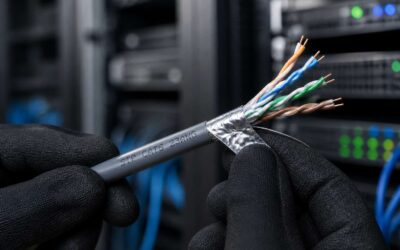
The physical characteristics of the cable also reveal its origin. Authentic twisted pairs exhibit consistent lay lengths and uniform insulation thickness. Counterfeit cable often shows irregular pair twisting, brittle jacketing, or copper clad aluminium conductors disguised as pure copper. You can perform a simple scrape test on the conductor, but a more reliable method involves checking the cable’s return loss and near end crosstalk with a certifier. These measurements do not lie. For ethernet cables South Africa installations, the difference between genuine and counterfeit components becomes apparent under PoE loads, where resistance causes heat buildup. Inspect these elements:
– The print on the cable jacket, which should include a manufacturer logo and sequential metre marks
– The colour consistency of the insulation and the absence of chemical odours
– The certification marks, such as UL or ETL logos, which counterfeiters often misspell
The performance gap between authentic and fake cabling widens with distance. A 20 metre run might work fine with a counterfeit cable, but a 90 metre horizontal channel will expose every flaw. Specifying ethernet cables South Africa from authorised distributors protects your warranty, but the real safeguard lies in understanding what genuine quality looks like before the cable goes into the ceiling.
Bulk Purchasing Options for Businesses and Resellers
Every month, procurement teams across Gauteng place bulk orders for ethernet cables South Africa without visiting the supplier’s warehouse once. That is a gamble. A distributor that cannot show you an actual drum before you pay may be working from a photographed sample. I have seen resellers lose entire contracts this way.
Bulk purchasing terms vary widely. Some suppliers discount heavily on thirty drums and then fail to deliver on time. Others hold stock locally and offer same week dispatch. When you source ethernet cables South Africa for a large project, the dependable suppliers share a consistent pattern:
- A physical warehouse address with open visiting hours
- A named manufacturer on every test certificate
- Written confirmation of stock levels from the last working day
These checks take an afternoon. The alternative is discovering a bad batch after your cable is terminated in a ceiling.
Professional Installation Services vs DIY Setup
Somewhere in Johannesburg, a homeowner is staring at a terminated RJ45 plug that resembles abstract sculpture. The DIY route for ethernet cables South Africa is tempting, especially when video tutorials make crimping look effortless. It is not.
Professional installers bring certification tools, termination experience, and knowledge of local building codes. They also spot hidden obstacles inside wall cavities. Sourcing trusted cabling solutions means verifying the supplier before work begins:
- Demand test certificates naming the manufacturer
- Request written stock levels from the last working day
- Visit the warehouse or confirm a physical address
DIY setup saves on labour. A bad termination in the ceiling voids the entire run. For ethernet cables South Africa, the second visit costs more than the first.

0 Comments