Decoding Twisted Pair Technology
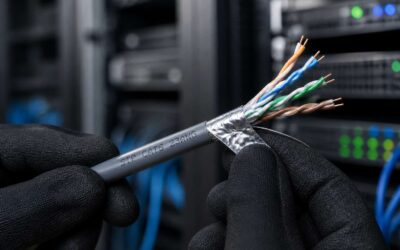
Twisted pair technology remains essential to South African data transmission. Two copper conductors, wound together in a precise helix, cancel electromagnetic noise from neighbouring pairs and external sources. That simple physics explains why UTP data cables South Africa stay the default choice for structured cabling projects.
The performance story runs deeper than the wire itself:
– Twist density varies by category and affects maximum frequency
– Conductor gauge influences signal attenuation over distance
– Jacket material determines fire ratings and environmental suitability
Local conditions add another dimension. Heat, humidity, and voltage fluctuations are harsh realities for network infrastructure in Johannesburg, Durban, and Cape Town. A cable that performs perfectly in a laboratory may struggle in a roof space that reaches forty degrees Celsius. UTP data cables South Africa must withstand these practical challenges while delivering consistent throughput.
Installation quality ultimately decides whether copper delivers on its theoretical promise.
The Local Connectivity Ecosystem
South Africa’s connectivity story is one of adaptation. From Johannesburg’s financial districts to Cape Town’s tech hubs, the demand for reliable networks keeps growing. UTP data cables South Africa businesses rely on are the quiet backbone of this expansion.
Local installers face real challenges. Heat, humidity, and power fluctuations test every cable run. A poorly terminated Cat6 in Durban fails faster than one in a climate-controlled server room.
What makes a network resilient here?
- Proper shielding against electromagnetic interference
- UV-resistant jackets for exposed outdoor runs
- Certified copper that meets international standards
- Correct installation practices for local conditions
These factors decide whether your connection survives the afternoon thunderstorm or the next load-shedding cycle. The local ecosystem goes beyond importing cable. It’s about how it behaves in your building, your climate, your grid.
Installation and Performance Optimization
Pulling UTP data cables South Africa through ceiling voids is an act of faith. One wrong bend, one staple too tight, and your gigabit dreams turn into packet loss nightmares. I test every drop after termination, because real performance emerges only when the physical layer behaves.
Pay attention to the pull tension. Exceeding 25 pounds can stretch the twisted pairs, altering impedance and inviting crosstalk. Avoid tight bundles near fluorescent lights, and keep separation from power cables at least 50mm. Here is what I check before signing off:
- Cable bend radius stays above four times the outer diameter
- No kinks or sharp cinches at the wall plate
- Proper dressing in the patch panel for airflow
Once installed, a quick certification test reveals the truth. UTP data cables South Africa handle high temperatures poorly, so keep them clear of hot roof spaces for consistent throughput.
Compliance and Environmental Considerations
When you specify UTP data cables South Africa, compliance is not a formality. It is a safety baseline. Local rules, such as SABS 10114 and the Electrical Machinery Regulations, dictate fire resistance and smoke emission. Those details matter greatly when cables hide in ceiling voids.
- Check for IEC 60332 ratings on flame retardance.
- Verify halogen content in the jacket material.
- Confirm supplier documentation matches the batch number.
Environmental factors extend beyond installation. Many manufacturers now move away from PVC to halogen free compounds. That shift reduces toxic fumes during a fire and simplifies recycling later. I always ask about the cable’s end of life disposal before recommending a brand. It is a small step that makes a large difference for our local environment.
Selecting Reliable Cable Providers
Finding a dependable supplier for UTP data cables South Africa is more than a technical decision. It is a business relationship. The market has no shortage of vendors, but genuine reliability remains scarce.
I have seen projects stall because a provider promised premium cabling and delivered substandard reels. That costs time, money, and credibility! When you evaluate a provider, look beyond the price list. Ask about testing standards, batch traceability, and warranty terms. A reputable supplier will happily share certification details. They will also explain how they handle stock shortages or delivery delays.
Consider these factors:
- Does the provider stock genuine branded cable?
- Are their technical staff reachable for support?
- What is their lead time for bulk orders?
Ultimately, the right partner makes your network infrastructure dependable. Choose carefully, because UTP data cables South Africa support every critical connection you rely on.

0 Comments